
Why does my shin hurt after kicking or checking?
Most shin pain right after kicking or checking is a bone bruise: bleeding in the thin layer that covers the bone. It usually settles with rest, ice, and time off contact. Pain that builds over weeks of running and skipping is more likely shin splints, and pain at one spot that gets worse day to day can be a stress fracture, which needs a doctor.
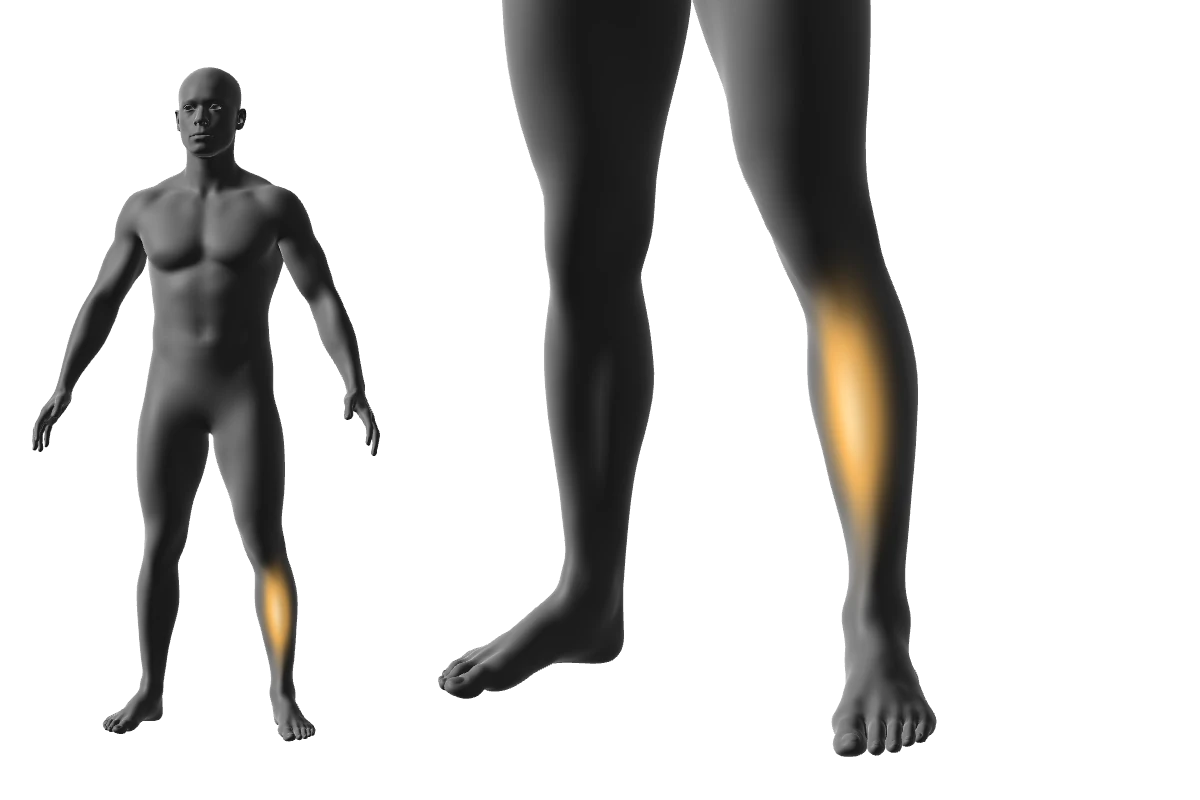
Why fighters get shin pain
When shin meets shin in a check, or a kick lands on a knee or elbow, the impact can bruise the covering of the bone (a periosteal bone bruise). People who play contact sports are at higher risk.
Studies of Muay Thai and kickboxing back this up: bruises are the most common fight injury, and in one long study of professional kickboxers the lower leg was the most injured spot.
Shin splints are different. They come from overuse, usually after a sudden jump in how often, how long, or how hard you train, and they often show up early in a training camp. Running and skipping on hard surfaces makes them more likely.
What to do in the first few days
- Stop kicking and checking with that leg until it settles.
- Ice it for up to 20 minutes at a time, several times a day, wrapped in a towel, never directly on the skin.
- Use a compression bandage and keep the leg raised when you can. Loosen the bandage if the leg gets tighter, numb, or tingly.
- Over-the-counter pain relief can help, but don’t take it more than 10 days in a row without talking to a doctor.
- For shin splints, swap running and skipping for cycling or swimming for a few weeks.
How physical therapy helps
Your first visit is a 90-minute, one-on-one assessment. I press along the shin to find exactly where it hurts, watch you walk, hop, and kick, and test strength and mobility from your hips down to your feet. If anything points to a stress fracture, I send you for imaging before we load it.
For shin splints, rehab means strengthening the hips, calves, and the muscles that support the arch, working on single-leg balance and landing, and planning a gradual return to roadwork and skipping instead of jumping straight back in.
For a bone bruise, the work is getting your strength and movement back and deciding together when it’s safe to make contact again.
When can I train and spar again?
When you can do all of these without pain:
- Walking and everyday activity
- Pressing firmly on the sore spot
- Hopping on the injured leg
- Easy running, building distance before speed
- Kicking the bag, then pads, then checking in light sparring
- For shin splints: at least 2 weeks pain-free before full training
See a doctor now if…
- Pain at one spot on the bone that gets worse day to day, makes you limp, or aches at night. This can be a stress fracture.
- Sharp, intense bone pain after a hard clash, or you can’t put weight on the leg.
- Severe pain, tightness, numbness, pins and needles, or weakness in the leg after an injury. This can be compartment syndrome: go to the emergency room or call 911.
- Bone pain that lasts more than a few days or doesn’t ease with rest.
Questions fighters ask
Should I keep training on it?
Train around it, not through it. Keep your hands, footwork, and the other leg going, but stop kicking and checking with the sore shin until it’s pain-free to press and hop on. Loading a healing bone bruise too early raises the risk of a fracture.
Does shin conditioning work?
Bone does adapt to the loads it handles: studies of sprinters find stronger shin bones than in people who don’t train. But no study has measured this in Muay Thai fighters, so there’s no direct evidence for rolling bottles on your shins or kicking trees.
Do I need an X-ray?
A bone bruise doesn’t show on an X-ray (an MRI does), and early stress fractures can be missed on X-rays too. If your symptoms mean you should get imaging, I’ll tell you and refer you.
Is it a bone bruise or shin splints?
A bone bruise comes from one impact, and you usually know exactly when it happened. Shin splints build up over time with training load, especially running and jumping. Both can be tender to press, so if you’re not sure, get it assessed.
I see fighters and active people one-on-one at Vital Force Muay Thai Gym in Chino, CA. Not sure what’s going on? Start with a free call.
Book a free discovery callSources
- Cleveland Clinic: Bone Bruise (Bone Contusion): What It Is & Recovery Time
- AAOS OrthoInfo: Shin Splints
- AAOS OrthoInfo: Stress Fractures
- NHS: Compartment syndrome
- Strotmeyer et al.: Epidemiology of Muay Thai fight-related injuries (Injury Epidemiology, 2016)
- Zazryn, Finch, McCrory: A 16 year study of injuries to professional kickboxers in the state of Victoria, Australia (Br J Sports Med, 2003)
- Wilks et al.: Bone mass and geometry of the tibia and the radius of master sprinters, middle and long distance runners, race-walkers and sedentary control participants: A pQCT study (Bone, 2009)
This page is general information, not a diagnosis. See the website disclaimer.