
Inner knee pain after the clinch or a checked kick: is it my MCL?
Pain on the inside of the knee after it gets pushed inward or twisted is often a sprain of the MCL, the ligament on the inner side of the knee. Most MCL sprains heal without surgery, with rest, sometimes a brace, and progressive rehab. If you heard a pop, the knee gave way, or it locks, get it checked, because the ACL or meniscus can be hurt at the same time.
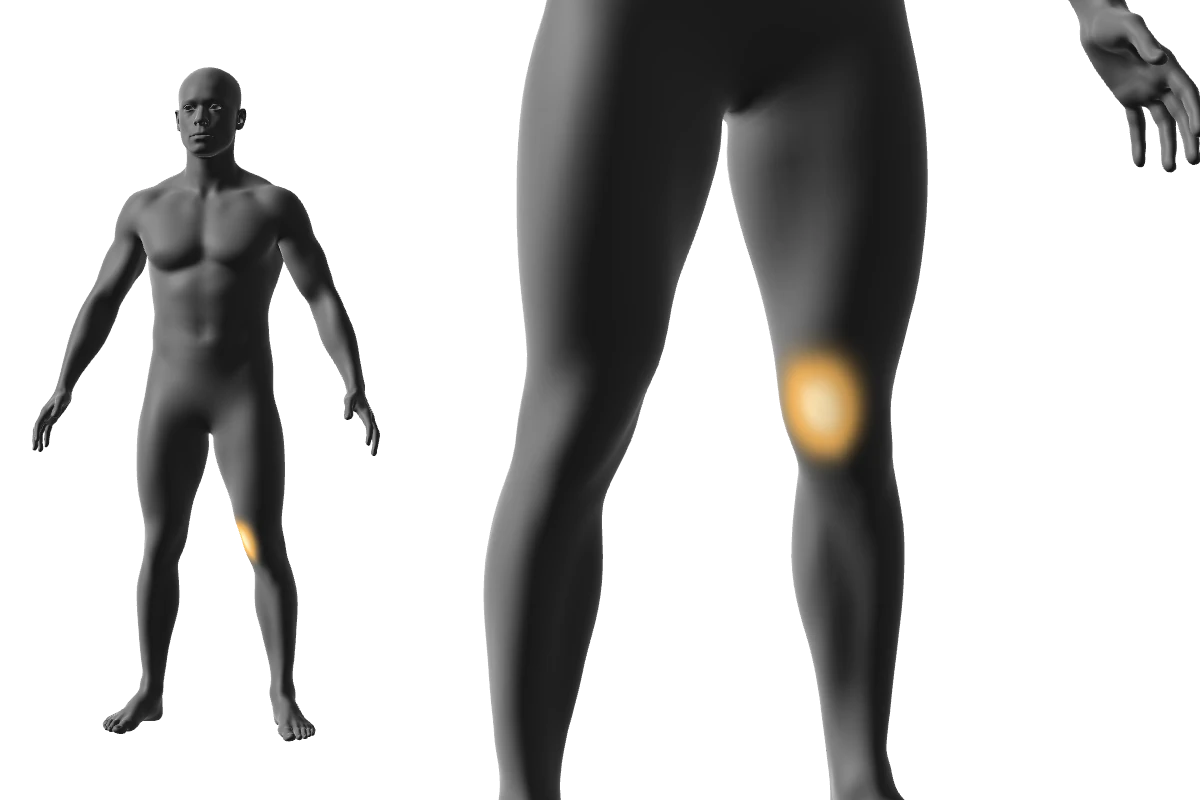
Why fighters get MCL injuries
The MCL runs down the inner side of the knee and stops it from bending inward. It gets hurt when the knee is hit from the outside or twisted hard, and it’s most exposed when the knee is slightly bent.
In Muay Thai, that can mean the planted leg getting twisted in the clinch, a sweep catching the standing leg, or a kick landing on the outside of the knee.
MCL sprains are graded 1 to 3. Grade 1 is a stretch with the knee still stable, grade 2 is a partial tear, and grade 3 is a complete tear with an unstable knee.
What to do in the first few days
- Rest and avoid anything that hurts for the first 24 to 48 hours, including kicking, pivoting, and clinch work.
- Ice for 15 to 20 minutes every couple of hours, with an elastic bandage for compression.
- Keep the leg raised when you can.
- If it hurts to put weight on it, crutches and a brace that limits side-to-side movement can help until it’s assessed.
How physical therapy helps
Your first visit is a 90-minute, one-on-one assessment: how it happened, how stable the knee is, and whether anything else might be involved. If something points to the ACL, meniscus, or a fracture, I’ll send you for imaging first.
Rehab moves from getting your range of motion back, to strengthening and balance work, to fight-specific drills: footwork, pivoting, checking kicks, and clinch work. Surgery is rarely needed for an MCL injury, and most athletes get back to their sport once it has healed.
“I had a knee injury that I was worried might inhibit my progression in my fight career. Lorraine worked with me and helped me made a full recovery and have confidence in my left knee again. She’s simply one of the best . Thank you Lorraine”
When can I train and spar again?
When you can do all of these without pain:
- Full bend and full straightening, the same as the other knee
- Strength close to the other leg
- Hopping and landing on the injured leg
- Pivoting and changing direction at full speed
- Checking kicks on pads and light clinch work
See a doctor now if…
- You can’t take four steps on it, right after the injury or later.
- You can’t bend the knee to 90 degrees.
- Tenderness right on the kneecap, or on the bony bump on the outside just below the knee.
- You heard a pop, the knee gave way, or it swelled within a day. These are signs of an ACL tear.
- The knee locks or catches. This can mean a meniscus tear.
- The knee feels wobbly or unstable side to side.
Questions fighters ask
How long does an MCL sprain take to heal?
Cleveland Clinic gives about 1 to 3 weeks for grade 1, 4 to 6 weeks for grade 2, and 6 weeks or more for grade 3.
Do I need surgery?
Rarely. Most MCL sprains heal with rest, rehab, and sometimes a brace. Surgery is usually for knees where other ligaments are torn too, or where the knee stays unstable.
Do I need an MRI?
Not always. An MRI may be ordered to check for other damage or to decide whether surgery is needed. A hands-on exam is still essential.
Should I wear a brace?
For a stable grade 1 or 2 sprain, a brace isn’t always necessary. A hinged brace can help you move with more support early on, and some athletes wear one when they first go back to sport.
Can I keep training?
Keep training what doesn’t hurt: upper body, conditioning, and technique that doesn’t load the knee sideways. Hold off on kicking, checking, sweeps, and clinch work until you’ve been assessed.
I see fighters and active people one-on-one at Vital Force Muay Thai Gym in Chino, CA. Not sure what’s going on? Start with a free call.
Book a free discovery callSources
- AAOS OrthoInfo: Collateral Ligament Injuries
- Cleveland Clinic: Medial Collateral Ligament (MCL) Tear: Treatment & Recovery Time
- APTA ChoosePT: Physical Therapy Guide to Medial Collateral Ligament Injury
- Lucidi et al.: Current trends in the medial side of the knee: not only medial collateral ligament (MCL) (J Orthop Traumatol, 2024)
- Australian Family Physician (RACGP): The Ottawa knee rules: A useful clinical decision tool
This page is general information, not a diagnosis. See the website disclaimer.